Apart from product development, one of the most common challenges for start-ups is choosing the right office, a decision that can make or break the business. When renting an office in the early stages of a business, founders need to balance budget, image, flexibility and future expansion, as the decision directly affects cash flow and operational efficiency.
Starting from the real-life situations faced by early-stage founders, this article compares the pros and cons of three options, namely office rental, coworking spaces and virtual offices, and explains how to choose the right type of office under different circumstances. Finally, it also summarises four key points to note before renting an office, helping entrepreneurs pick the most suitable office solution.
How to Assess Your Office Needs in the Early Stages of a Business? Four Factors to Consider
Operating Model
If your company has a small team and most work can be done online, there is no need to rush into leasing a traditional office. You can consider a virtual office or coworking space instead, preserving cash flow and focusing resources on product, marketing and customer acquisition. If your team needs fixed desks and daily face-to-face collaboration, a traditional office would be more suitable.
Business Needs
Stage of Development
Cost Considerations
Office Rental vs Coworking Space vs Virtual Office
Traditional Office
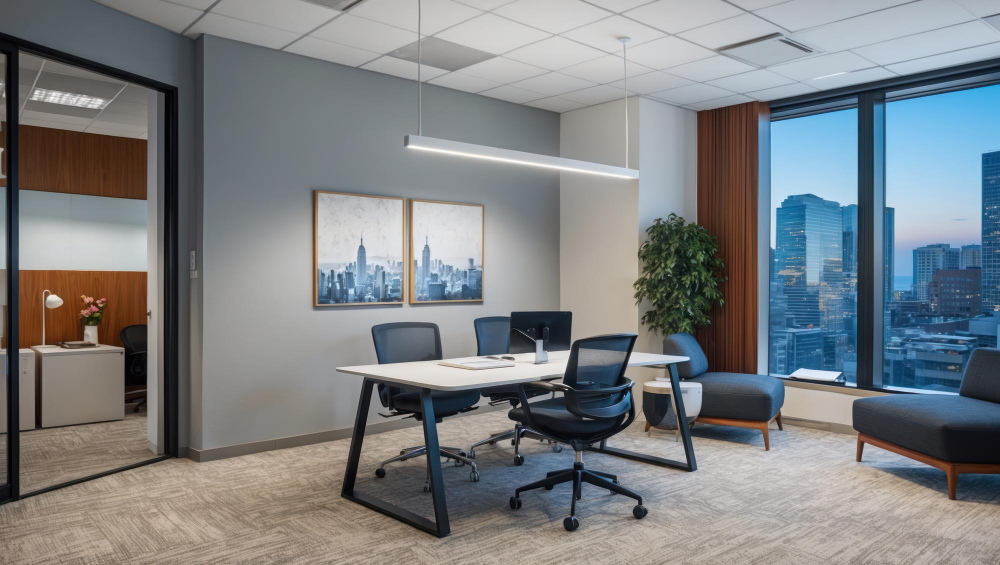
A traditional office is best suited to companies that need a fixed space, a long-term base and a higher level of privacy. This option usually allows you to fit out the space yourself, projects a more complete corporate image, and helps establish fixed internal workflows:
Pros
- Higher privacy, suitable for companies that need private meetings, document storage or handle sensitive business.
- Builds a professional brand image. When clients visit, they can see your company signage, reception area and meeting rooms, which helps create a strong first impression and sense of trust.
- The space can be customised to your company culture and workflows, such as setting up a reception area, open work zones, quiet zones or break areas, improving employee experience and productivity.
Cons
- High initial investment, as you need to pay for fit-out, basic furniture, internet and equipment, which puts significant pressure on start-ups with tight cash flow.
- Lower contract flexibility, since leases usually run for one year or more, making it hard to adjust the space if the business needs to downsize or relocate.
- More reinstatement and hidden costs upon lease termination, such as reinstatement works, cleaning fees or administrative charges, which can easily push start-up costs beyond the original budget.
虚拟办公室
A virtual office suits companies that need a business address, mail handling or basic registration purposes, but do not necessarily need to sit in a physical office every day. For start-ups at the asset-light stage, it is the lowest-cost and fastest option to get started:
Pros
- Lowest cost, the monthly fee generally covers only a business address, mail handling and basic administrative services, ideal for newly established companies still operating mainly from home or remotely.
- Can be used as your company registration and business registration address, offering greater reliability for receiving government documents, bank letters and client correspondence, and adding a sense of formality.
- No need to bear the fit-out and fixed expenses of a physical space. There is no fit-out, management fees or daily maintenance to handle, allowing entrepreneurs to focus on product and business development.
Cons
- No fixed workspace, so the team cannot collaborate consistently in one location and must rely on online tools and disciplined communication.
- Not suitable for businesses that need frequent client meetings, training sessions or internal meetings. If meetings are required, you still need to rent a meeting room separately or use other venues.
- Although it provides a professional address, clients may not regard it as equivalent to a physical office. For industries that place a high value on face-to-face meetings and premises, it may not be enough to build the same level of trust.
Four Key Points Entrepreneurs Should Pay Special Attention to Before Renting an Office
The following four points can help entrepreneurs conduct a thorough assessment before signing, ensuring the office they are about to lease meets the company’s current needs and future direction:
1. Rental Terms and Additional Charges
Whether you choose an office, coworking space or virtual office, make sure you clearly understand what is included in the rent before signing. Entrepreneurs should confirm item by item whether the rent covers management fees, rates, air-conditioning charges, cleaning and basic facility usage, to avoid separate or add-on charges later. This is especially important for coworking or serviced offices, which often bundle different services into package pricing, so read the fee details carefully.
2. Lease Term, Deposit and Termination Arrangements
The length of the lease directly affects a start-up’s flexibility, and new companies should avoid signing overly long leases at the outset. Before signing, find out the minimum lease term, early termination clauses and whether renewal is allowed, as well as the deposit amount and refund timeline. In addition, whether the unit needs to be reinstated to its original condition upon termination, how the reinstatement standard is defined, and who is responsible for the works and costs should all be clearly stated in the contract to avoid future disputes.
3. Location, Transport and Amenities
Even for a start-up, the office location still affects employee commutes, clients’ willingness to visit and the company’s image. When choosing a location, beyond rent, consider factors such as distance to MTR stations, bus routes, and nearby dining and daily amenities. If your business involves frequent client meetings, choosing a well-connected location with a recognisable landmark can enhance professionalism and client experience; if your business operates mainly online, you can opt for a more cost-effective district depending on your budget.
4. Flexibility and Room for Future Expansion
Podium Property Agency Helps You Choose Your Start-Up Office
If you are considering renting an office for your start-up, rather than viewing properties on your own, engaging a professional agent who knows the market, understands the characteristics of different commercial buildings and lease terms can greatly reduce trial-and-error costs, helping you avoid pitfalls in contracts and hidden charges.
Podium Property Agency offers office, serviced office and coworking space listings across Hong Kong Island, Kowloon and the New Territories. Click here to search now. In addition, our professional property agency team can match suitable listings to your requirements, helping you find your ideal office within budget. Feel free to contact us to learn more. WhatsApp: 5977 5966.
Frequently Asked Questions
What is usually included in coworking space fees?
When renting an office, is a long lease always better value than a short one?
Does a virtual office help with company image?
Yes, but to a limited extent. A virtual office provides a business address and basic administrative support, which is suitable for establishing an initial professional image, but it may not be enough to replace the corporate image created by a physical office space.